
Design the decision before the timetable
A comic convention programme has to do more than fit names into a grid. It helps someone decide where to go, how much time to leave, and what to do when two appealing sessions overlap. Begin by writing the questions a first-time visitor needs answered. Is this a conversation, demonstration, signing, workshop, or screening? Does it require another ticket? Where does the queue begin? A clear programme answers those questions before asking the reader to interpret a crowded schedule.
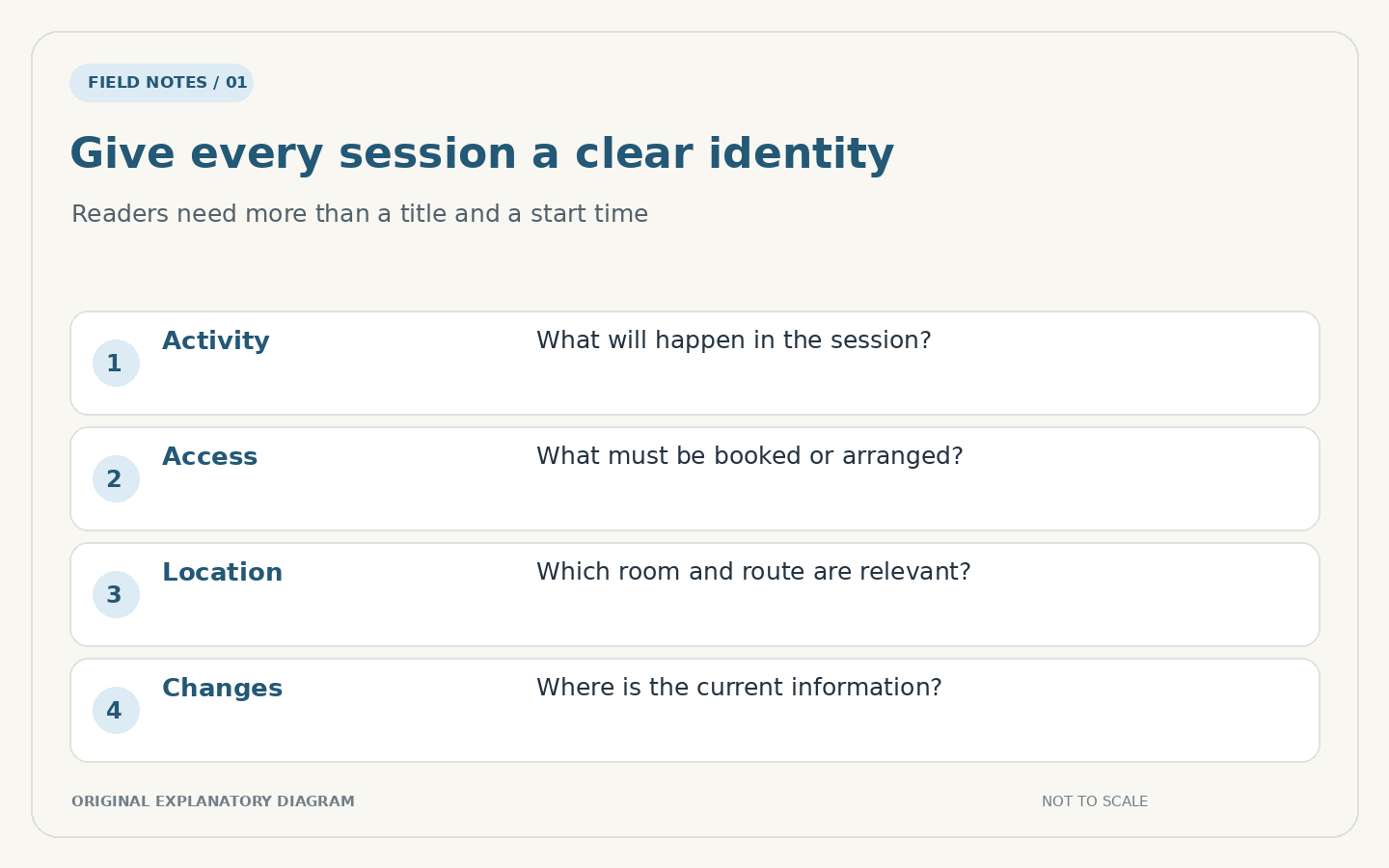
Choose a consistent description format for every session. Include the main activity, intended audience, location, expected duration, and any booking requirement. A lively title can attract attention, but it should not carry the whole explanation. Someone unfamiliar with a creator or series still needs enough information to understand what the session offers and whether it fits the visit they want to make.
Treat movement as part of the programme
Leave room in the planning process for the journey between sessions. W3C's accessible-event guidance highlights accessible routes, breaks, time between rooms, and advance notice of changes. [1] These details belong in the public information as well as the organizer's working document. A schedule that assumes everyone can instantly move between distant rooms creates a practical problem before any panel begins.
Walk the likely connections with the venue team and identify the information visitors need at each decision point. Keep the public description simple: a room on another floor, an accessible route with a different entrance, or a session requiring early check-in. Do not invent a universal transfer time from one person's quickest walk. Describe the conditions and provide enough flexibility for people to plan their own movement.
Write session descriptions around the actual experience
Ask each contributor what participants will do during the session. A drawing workshop might involve observing a demonstration, trying an exercise, or bringing materials. A creator interview might include audience questions or remain a moderated conversation. These distinctions help visitors make informed choices and prevent avoidable disappointment. They also help the room team prepare the right seating, equipment, and communication support.
Avoid descriptions that promise access the event cannot guarantee. If a signing has limited capacity, explain the booking or allocation process separately from the creator biography. If a workshop is suitable only with a particular preparation, state that preparation plainly. Good information is neither a sales pitch nor a wall of restrictions; it describes the experience accurately enough that people can decide whether to take part.
Examine the moments when sessions overlap
The busiest movement may happen when several sessions end together or one especially popular event begins. HSE's crowd-risk guidance asks organizers to consider audience movement, venue suitability, and the effects of simultaneous attractions. [2] A programme editor therefore needs contact with the people responsible for crowd management. The timetable is one input into their assessment, not a separate document finalized without them.
Use a working map to mark the expected connections between popular activities. Ask which room changes deserve a closer look and which require information at more than one location. Leave capacity decisions, crowd controls, and emergency arrangements to the competent event team. The editor's useful contribution is to make the intended movement visible early, while the schedule can still be adjusted.
Make changes understandable across every version
Choose one authoritative schedule record and decide how updates reach the website, printed notices, information desk, and room teams. Give each change a time and a clear description. A message saying updated programme is less useful than one identifying the session, its former location, and the new arrangement. People should be able to understand the change without comparing two entire documents.
Keep old versions distinguishable when they remain in circulation. A date or version label helps staff recognize a printed copy that no longer reflects the current plan. At the venue, place change information where affected visitors are likely to look, including the original room. A person who followed yesterday's instructions should encounter helpful redirection rather than an empty doorway and an unexplained cancellation rumor.
Provide several ways to use the same information
Some visitors will plan in advance on a large screen; others will check one session on a phone while standing in a corridor. Prepare a readable text version alongside any decorative grid. Use meaningful room names and consistent session labels so that the same item can be recognized in different formats. A screenshot of a dense poster should not be the only available programme.
Offer a way to ask a practical question that the published information does not resolve. The answer may reveal something worth adding for everyone, such as the location of an accessible entrance or the difference between a ticketed session and an open demonstration. Keep responses aligned with the current schedule record. An enthusiastic volunteer should not have to reconstruct the event from scattered social posts.
Try a visitor rehearsal before publication
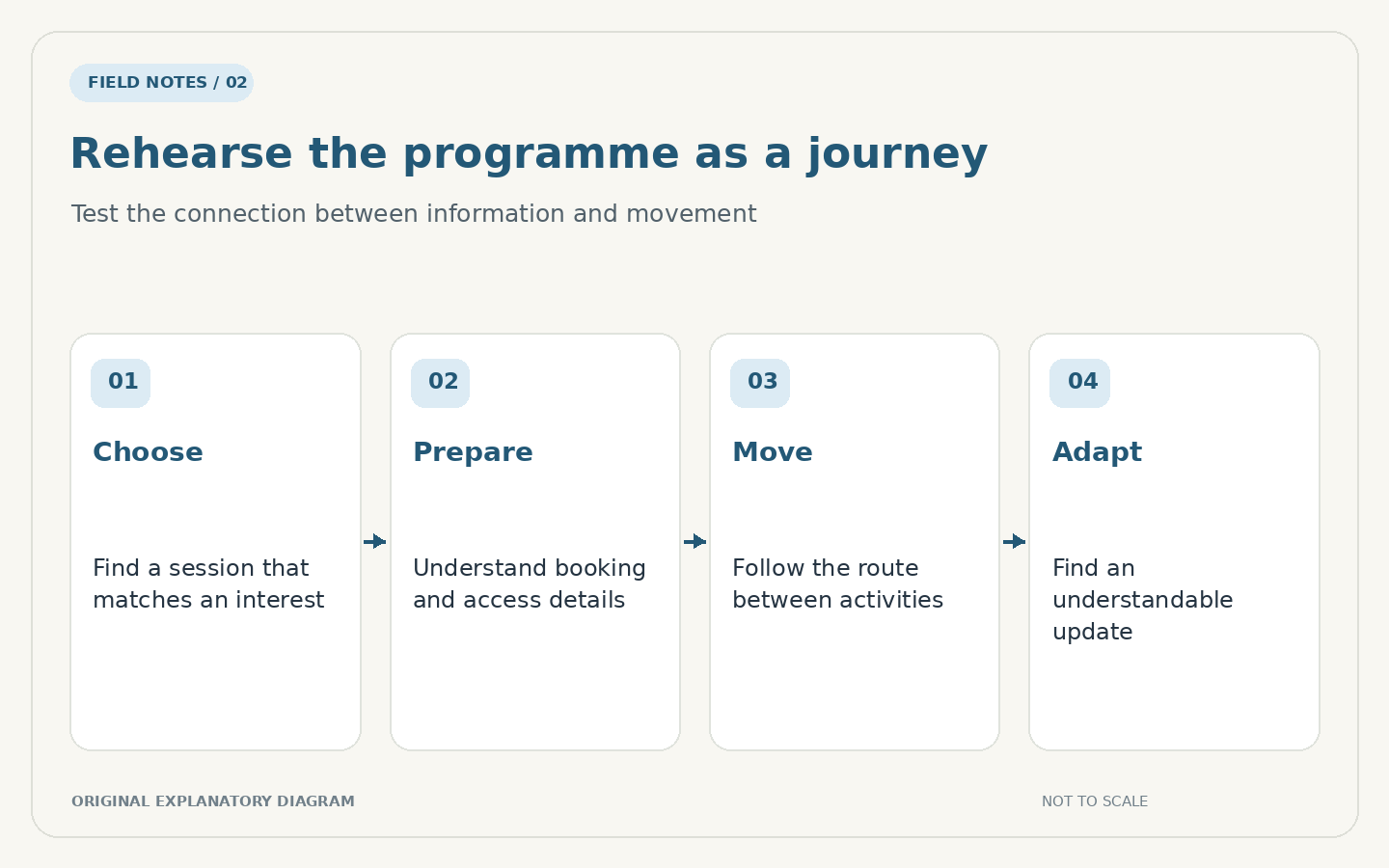
Invent a clearly hypothetical itinerary with two or three interests and a realistic need for a break. Ask someone unfamiliar with the draft to explain how they would use it. Notice where they hesitate, confuse rooms, or assume that a booking is included. This is a usability exercise about the programme, not a test of the visitor's ability to decode it.
Run a second rehearsal around a change: move one session or alter its booking status, then check whether the person can discover the new arrangement. A programme that works only when nothing changes is incomplete for a live event. Record the points of confusion and revise the information hierarchy. Often a clearer label or a short explanation solves more than adding another decorative symbol to the grid.
Keep a useful record for the next event
After the convention, collect specific information from the programme desk, room teams, and contributors. Ask which descriptions caused repeated questions, which changes were difficult to communicate, and which routes visitors misunderstood. Separate those issues from opinions about whether a session was enjoyable. The programme's job is to make choices and movement understandable, so its review should include evidence about those tasks.
Keep the successful description format and the lessons about update handling for the next edition. A strong programme does not require every visitor to follow one ideal day. It gives different people reliable information for building their own experience, including time to move, rest, and change plans. That makes the schedule a practical part of the convention rather than a promotional image that stops being useful at the entrance.
Sources
- Making Events Accessible — World Wide Web Consortium, Web Accessibility Initiative
- Assess crowd safety risks and identify hazards — Health and Safety Executive